RP-0024
Digital Poster
Filter:
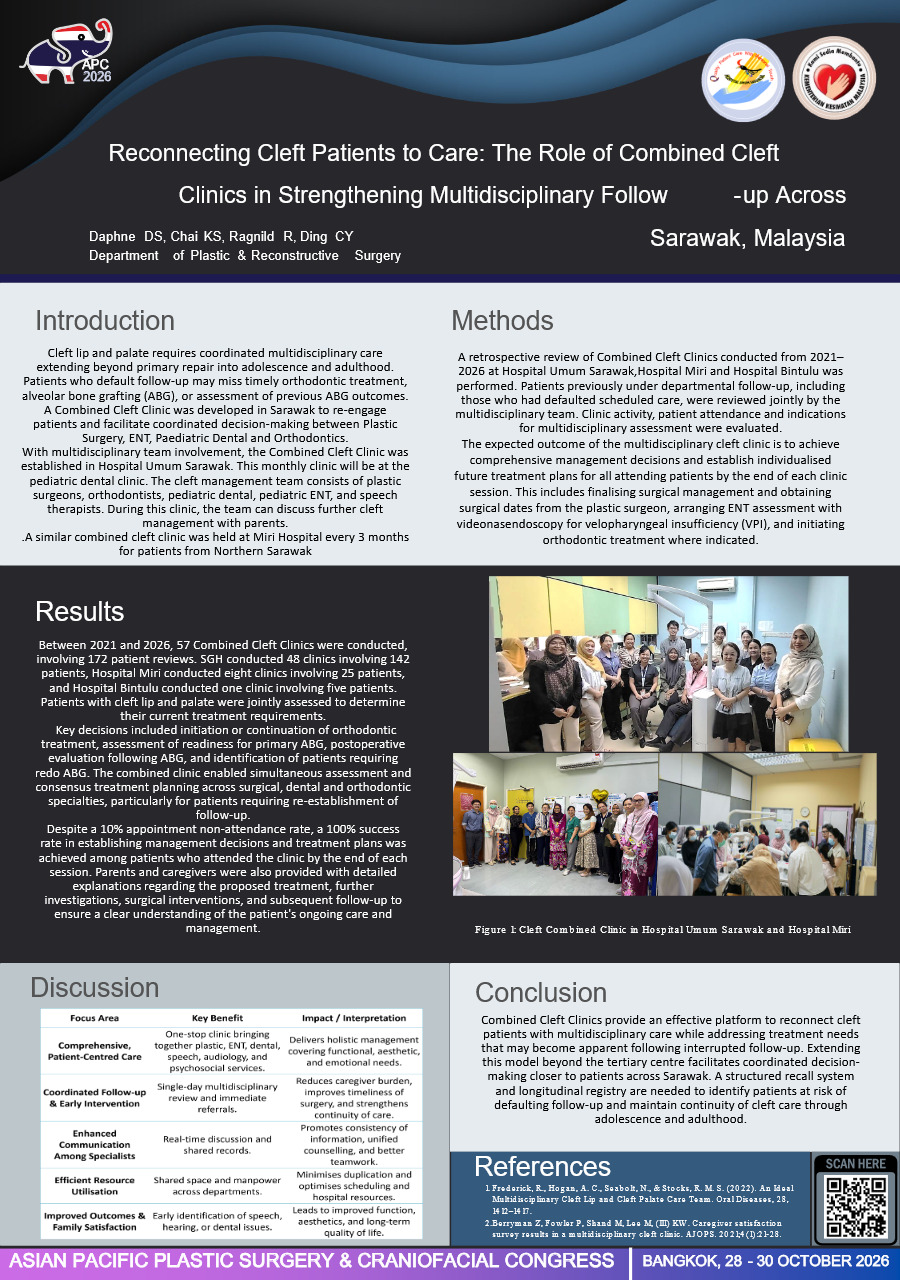
Reconnecting Cleft Patients to Care: The Role of Combined Cleft Clinics in Strengthening Multidisciplinary Follow-up Across Sarawak, Malaysia RP-0024
Daphne Dewi Stephen · Research
Background:
Cleft lip and palate requires coordinated multidisciplinary care extending beyond primary repair into adolescence and adulthood. Patients who default follow-up may miss timely orthodontic treatment, alveolar bone grafting (ABG), or assessment of previous ABG outcomes. A Combined Cleft Clinic was developed in Sarawak to re-engage patients and facilitate coordinated decision-making between Plastic Surgery, Paediatric Dental and Orthodontics.
Methods:
A retrospective review of Combined Cleft Clinics conducted from 2021–2026 at Sarawak General Hospital (SGH), Hospital Miri and Hospital Bintulu was performed. Patients previously under departmental follow-up, including those who had defaulted scheduled care, were reviewed jointly by the multidisciplinary team. Clinic activity, patient attendance and indications for multidisciplinary assessment were evaluated.
Results:
Between 2021 and 2026, 57 Combined Cleft Clinics were conducted, involving 172 patient reviews. SGH conducted 48 clinics involving 142 patients, Hospital Miri conducted eight clinics involving 25 patients, and Hospital Bintulu conducted one clinic involving five patients. Patients with cleft lip and palate were jointly assessed to determine their current treatment requirements. Key decisions included initiation or continuation of orthodontic treatment, assessment of readiness for primary ABG, postoperative evaluation following ABG, and identification of patients requiring redo ABG. The combined clinic enabled simultaneous assessment and consensus treatment planning across surgical, dental and orthodontic specialties, particularly for patients requiring re-establishment of follow-up.
Conclusion:
Combined Cleft Clinics provide an effective platform to reconnect cleft patients with multidisciplinary care while addressing treatment needs that may become apparent following interrupted follow-up. Extending this model beyond the tertiary centre facilitates coordinated decision-making closer to patients across Sarawak. A structured recall system and longitudinal registry are needed to identify patients at risk of defaulting follow-up and maintain continuity of cleft care through adolescence and adulthood.
View only · Double-click poster to enlarge · Download & print disabled
Loading poster…
RP-0008
- Title
- A Standardized Clinical Protocol for Digital Nasal Stents in Patients with Cleft Lip and Palate
- Author(s)
- Pitchaporn Teacharushatakit
- Affiliation
- Khon Kaen University
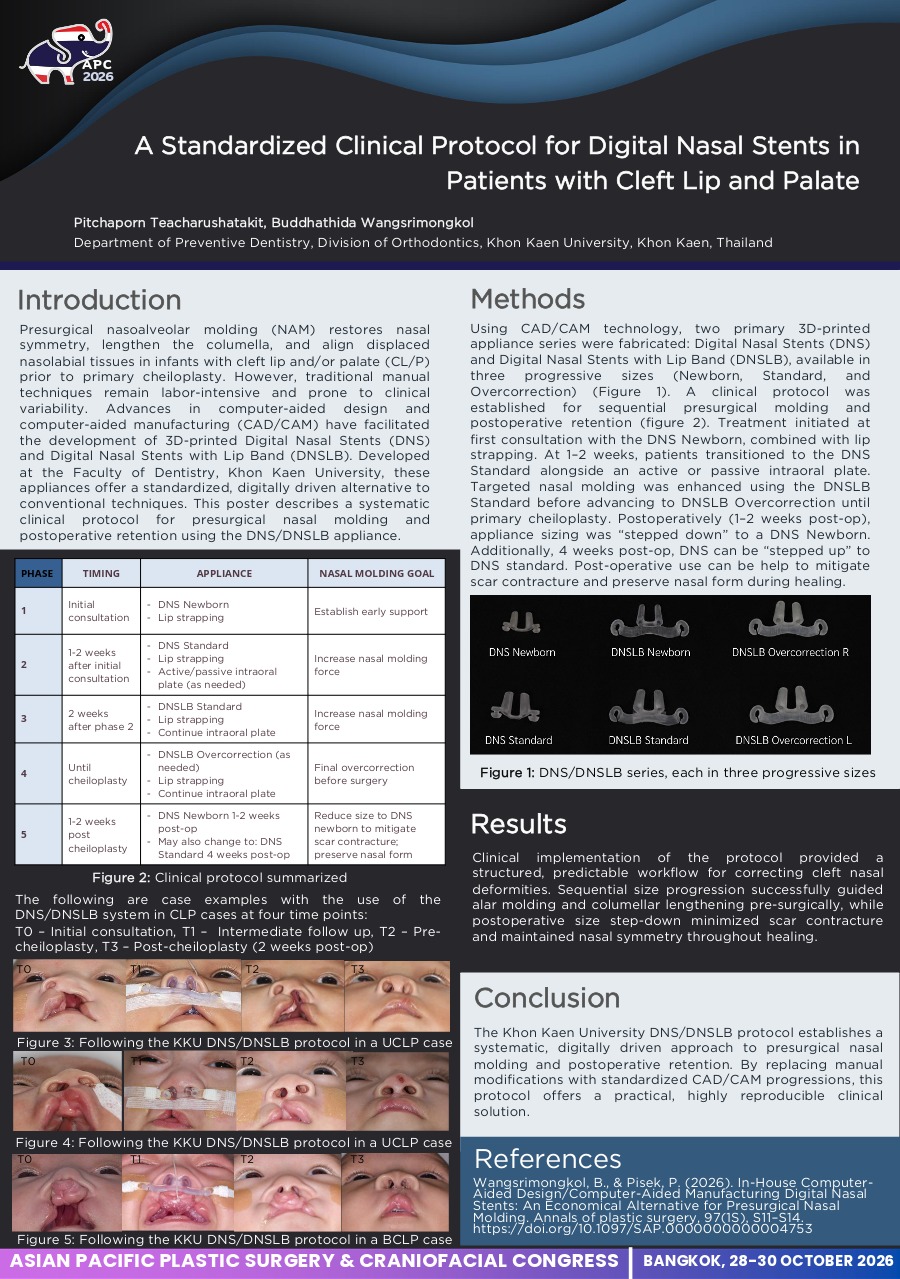
A Standardized Clinical Protocol for Digital Nasal Stents in Patients with Cleft Lip and Palate RP-0008
Pitchaporn Teacharushatakit · Research
Introduction: Presurgical nasoalveolar molding (NAM) restores nasal symmetry, lengthens the columella, and aligns displaced nasolabial tissues in infants with cleft lip and/or palate (CL/P) prior to primary cheiloplasty. However, traditional manual techniques remain labor-intensive and prone to clinical variability. Advances in computer-aided design and computer-aided manufacturing (CAD/CAM) have facilitated the development of 3D-printed Digital Nasal Stents (DNS) and Digital Nasal Stents with Lip Band (DNSLB). Developed at the Faculty of Dentistry, Khon Kaen University, these appliances offer a standardized, digitally driven alternative to conventional techniques. This report describes a systematic, step-by-step clinical protocol for presurgical nasal molding and postoperative retention using the DNS/DNSLB system.
Methods: Using CAD/CAM technology, two primary 3D-printed appliance series were fabricated: Digital Nasal Stents (DNS) and Digital Nasal Stents with Lip Band (DNSLB), available in three progressive sizes (Newborn, Standard, and Overcorrection). A four-phase clinical protocol was established for sequential presurgical molding and postoperative retention. Treatment initiated at first consultation with the DNS Newborn, combined with lip strapping as needed. At 1–2 weeks, patients transitioned to the DNS Standard alongside an active or passive intraoral plate. Targeted nasal molding was enhanced using the DNSLB Standard before advancing to DNSLB Overcorrection until primary cheiloplasty. Postoperatively (1–2 weeks post-op), appliance sizing was "stepped down" to a DNS Newborn or Standard to mitigate scar contracture and preserve nasal form during healing.
Results: Clinical implementation of the protocol provided a structured, predictable workflow for correcting cleft nasal deformities. Sequential size progression successfully guided alar molding and columellar lengthening presurgically, while postoperative size step-down minimized scar contracture and maintained nasal symmetry throughout healing.
Conclusion: The Khon Kaen University DNS/DNSLB protocol establishes a systematic, digitally driven approach to presurgical nasal molding and postoperative retention. By replacing manual modifications with standardized CAD/CAM progressions, this protocol offers a practical, highly reproducible clinical solution.
View only · Double-click poster to enlarge · Download & print disabled
Loading poster…
RP-0029
- Title
- Survey of chief complaints in patients with cleft lip and/or palate with jaw deformity
- Author(s)
- Natsuko Uchino
- Affiliation
- Department of Oral-Maxillofacial Surgery and Orthodontics,The University of Tokyo Hospital
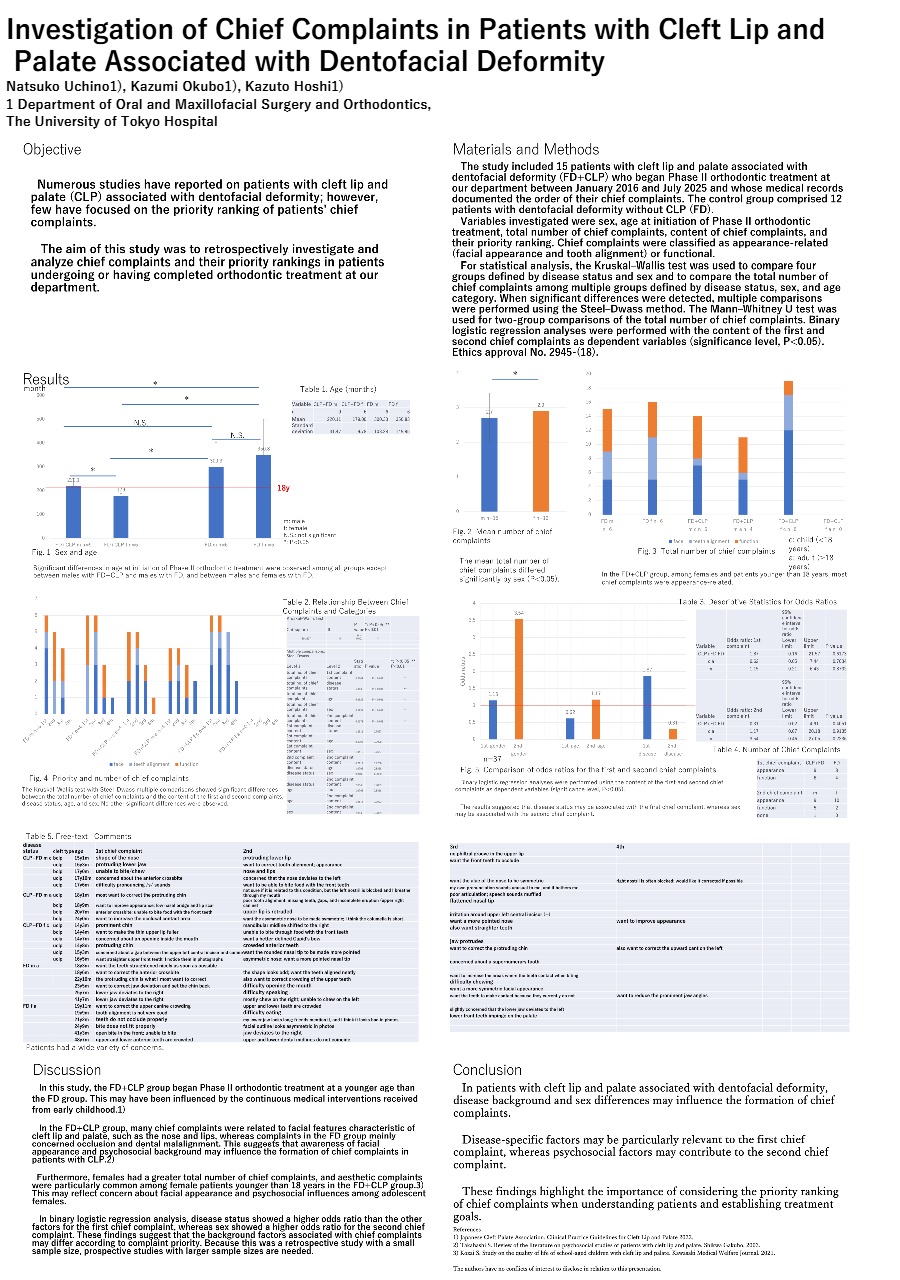
Survey of chief complaints in patients with cleft lip and/or palate with jaw deformity RP-0029
Natsuko Uchino · Research
Objective: This study aimed to retrospectively evaluate the content and priority of chief complaints in patients with cleft lip.
Materials and Methods: Fifteen patients with cleft lip and palate accompanied by jaw deformities (FD+CLP) who initiated second-phase orthodontic treatment at our department between January 2016 and July 2025 and had clearly recorded chief complaints were included. Twelve patients with jaw deformities without cleft lip and palate (FD) were enrolled as a control group. The variables analyzed were sex, age at the start of second-phase treatment, total number of chief complaints, and the content and priority of complaints. Chief complaints were classified as esthetic (“appearance”) or functional.
Kruskal–Wallis tests were used for four-group comparisons based on disease and sex and for multigroup comparisons combining disease, sex, and age category, followed by Steel–Dwass multiple comparisons when significant differences were detected. Mann–Whitney U tests were applied for two-group comparisons of the total number of complaints. The significance level was set at P<0.05.
Results: Patients in the FD+CLP group were significantly younger than those in the FD group at the start of second-phase treatment, and within the FD+CLP group, males were significantly older than females (P<0.05). The total number of chief complaints was significantly greater in females than in males (P<0.05), and significant differences were observed among multigroup(P<0.01). Logistic regression analyses suggested that disease was most strongly associated with the content of the first chief complaint (OR 1.9), whereas sex was most strongly associated with the content of the second chief complaint (OR 3.6).
Conclusions: Factors associated with chief complaints differed according to their priority. Disease was associated with the first chief complaint, whereas sex was associated with the second. Further prospective studies with larger sample sizes are warranted.
View only · Double-click poster to enlarge · Download & print disabled
Loading poster…
RP-0009
- Title
- Duration of Presurgical Orthodontic Preparation for Alveolar Bone Grafting in Unilateral Cleft Lip and Palate: Comparison of Clear Aligner, Removable Appliance, and Quad Helix
- Author(s)
- Krisadi Phannarus
- Affiliation
- Queen Sirikit National Institute of Child health
Duration of Presurgical Orthodontic Preparation for Alveolar Bone Grafting in Unilateral Cleft Lip and Palate: Comparison of Clear Aligner, Removable Appliance, and Quad Helix RP-0009
Krisadi Phannarus · Research
Introduction (background and objective):
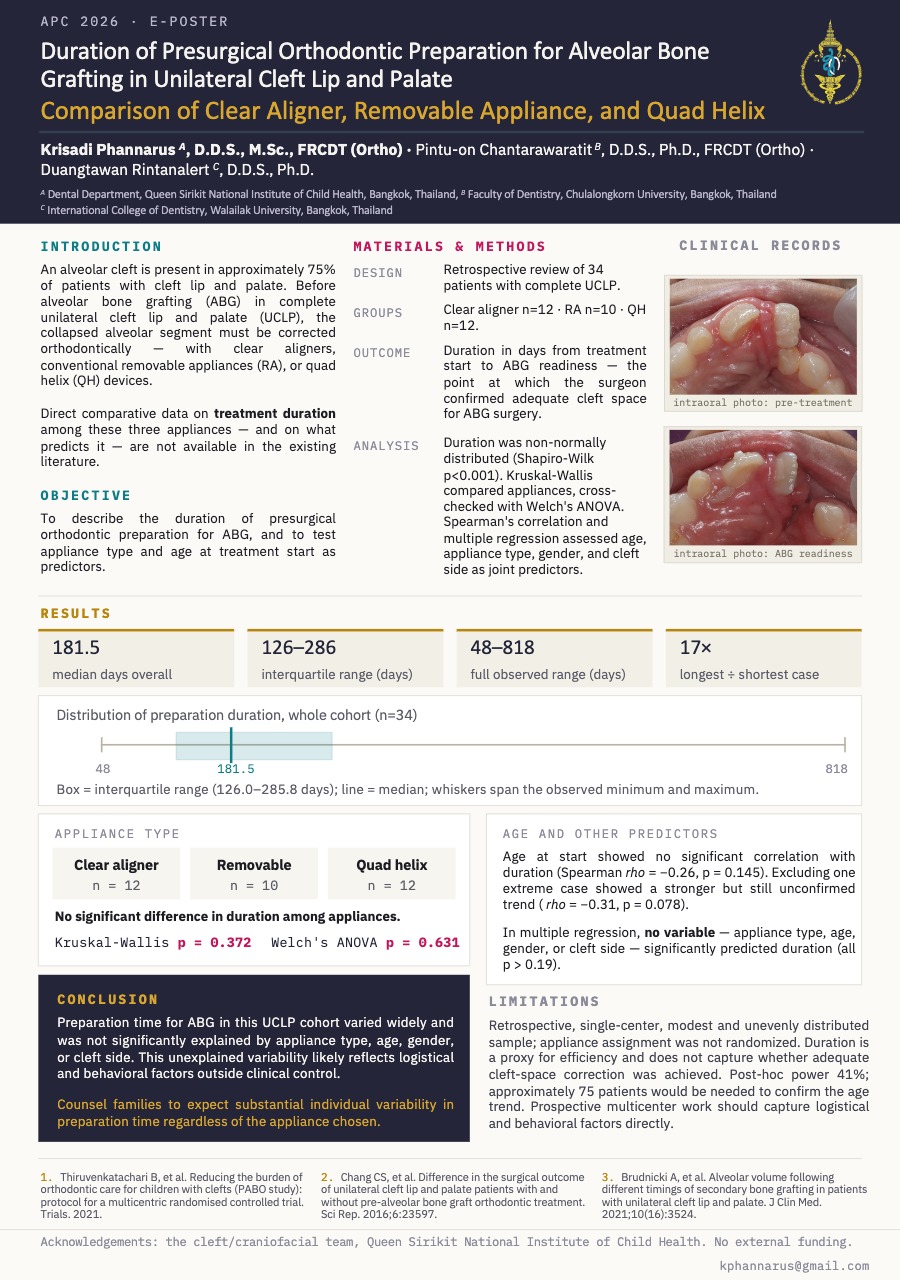
Presurgical orthodontic correction of the collapsed alveolar segment is required before alveolar bone grafting (ABG) in patients with complete unilateral cleft lip and palate (UCLP). Clear aligners, conventional removable appliances (RA), and quad helix (QH) devices are all used for this purpose, but comparative data on treatment duration are limited, making it difficult to counsel families on expected timelines. This study described the duration of presurgical orthodontic preparation for ABG in UCLP patients and compared this duration among clear aligner, RA, and QH groups.
Materials & Methods:
A retrospective review of 31 UCLP patients who underwent presurgical orthodontic treatment before ABG was conducted (clear aligner, n = 11; RA, n = 10; QH, n = 10). The primary outcome was treatment duration (days) from orthodontic treatment initiation to surgeon-confirmed readiness for secondary alveolar bone grafting. Data normality was assessed using the Shapiro–Wilk test, and homogeneity of variances was evaluated using Levene's test. Because the assumption of equal variances was violated, treatment duration among the three groups was compared using Welch's ANOVA, followed by Games–Howell post hoc pairwise comparisons.
Result(s):
Mean treatment duration was 231 ± 93 days for the clear aligner group, 201 ± 100 days for the QH group, and 400 ± 292 days for the RA group. Welch's ANOVA showed no significant difference in treatment duration among the three appliance groups (p = 0.165), and Games–Howell post hoc comparisons were not significant (all p > 0.05).
Conclusion:
No appliance demonstrated significantly faster presurgical preparation for ABG despite numerical differences favoring quad helix. Given wide individual variability, likely influenced by operating-room scheduling, patient cooperation, and laboratory turnaround, clinicians should counsel UCLP families to expect a variable, often prolonged, preparation period and closely monitor canine eruption throughout, regardless of appliance chosen.
View only · Double-click poster to enlarge · Download & print disabled
Loading poster…
RO-0077
- Title
- Cross-Linguistic Nasalance Profiles in Healthy Malaysian Adults: A Comparison Across Malay, Mandarin, and Tamil
- Author(s)
- Hasherah Mohd Ibrahim
- Affiliation
- UNIVERSITI KEBANSAAN MALAYSIA
Cross-Linguistic Nasalance Profiles in Healthy Malaysian Adults: A Comparison Across Malay, Mandarin, and Tamil RO-0077
Hasherah Mohd Ibrahim · Research
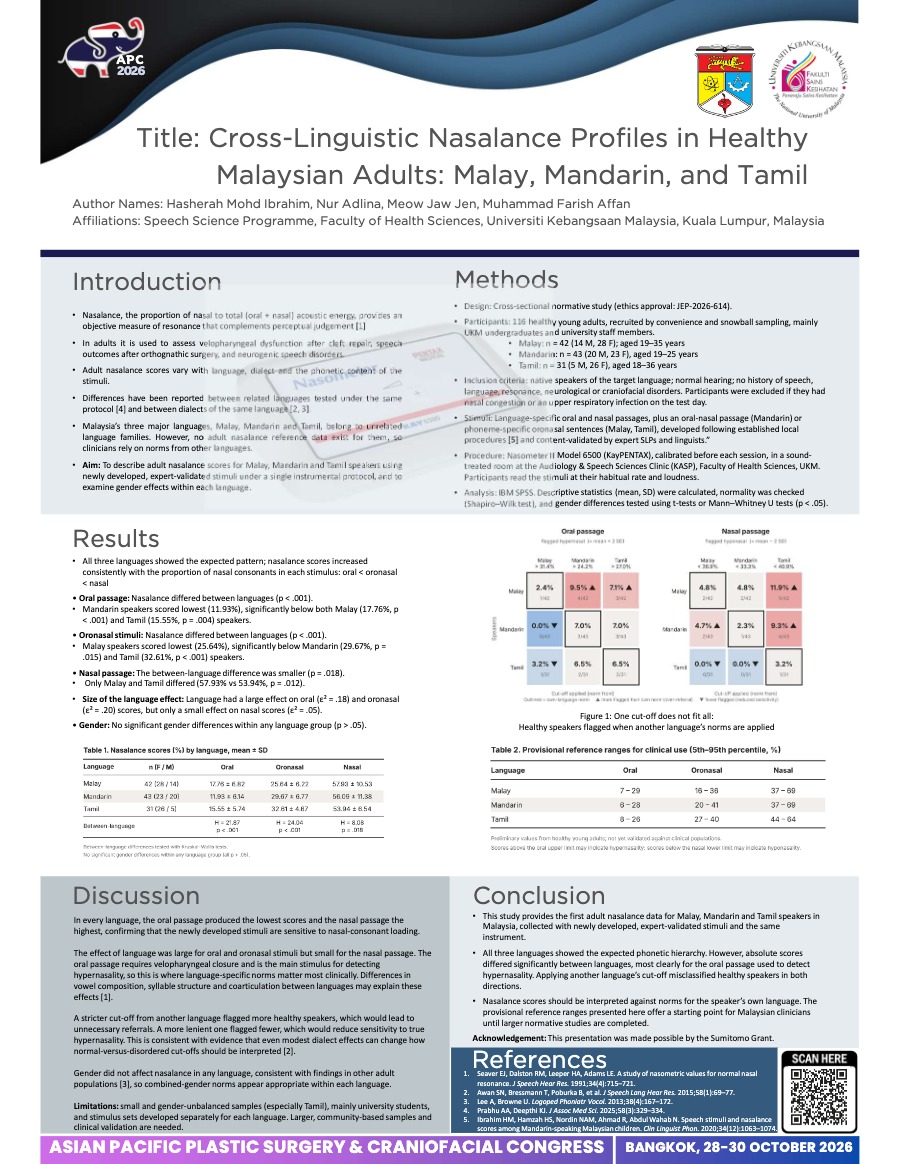
Introduction: Nasalance is an objective acoustic measure of the ratio of nasal to total acoustic energy during speech, used clinically to assess hypernasality and hyponasality. Nasalance values vary across languages and phonetic content, yet Malaysia lacks population-specific norms for Malay-, Mandarin-, and Tamil-speaking adults, and clinicians rely on foreign, pediatric, or mismatched benchmarks. This study compared nasalance profiles across these three major Malaysian language communities using harmonized stimuli and identical instrumentation to determine whether language-specific norms are clinically warranted.
Materials & Methods: A total of 116 healthy adults participated: 42 Malay speakers (14 males, 28 females; aged 19 to 35 years), 43 Mandarin speakers (20 males, 23 females; aged 19 to 25 years), and 31 Tamil speakers (5 males, 26 females; aged 18 to 36 years). Each participant read an oral passage, a nasal passage, and a set of oronasal phoneme-loaded sentences developed and validated in their respective language. Nasalance was recorded using the Nasometer II (KayPENTAX, Model 6500). Kruskal-Wallis tests with Dunn's post-hoc comparisons (Bonferroni-corrected) examined between-language differences for each passage type; Mann-Whitney U and independent samples t-tests examined gender differences within each language.
Results: Significant between-language differences were found for the oral passage (H=21.87, p<0.001), nasal passage (H=8.08, p=0.018), and oronasal sentences (H=24.04, p<0.001). Mandarin speakers produced significantly lower oral passage nasalance than Malay and Tamil speakers (p<0.001, p=0.017). Malay speakers showed significantly higher nasal passage scores than Tamil speakers (p=0.014), and significantly lower oronasal scores than Mandarin (p=0.017) and Tamil (p<0.001) speakers. No gender differences were found within any language group (p>0.05).
Conclusion: Nasalance profiles differ significantly across Malay, Mandarin, and Tamil speakers even when instrumentation, protocol, and stimulus construction are held constant within one country. Language-specific normative data are therefore clinically necessary in Malaysia's multilingual healthcare setting, and norms should not be generalized across language communities.
View only · Double-click poster to enlarge · Download & print disabled
Loading poster…
RP-0002
- Title
- A Survey on the Use of Social Media and Instant Messaging in Providing Treatment Information for Cleft Patients: A Single Foundation's Experience
- Author(s)
- Maritza May Pagan
- Affiliation
- —
A Survey on the Use of Social Media and Instant Messaging in Providing Treatment Information for Cleft Patients: A Single Foundation's Experience RP-0002
Maritza May Pagan · Research
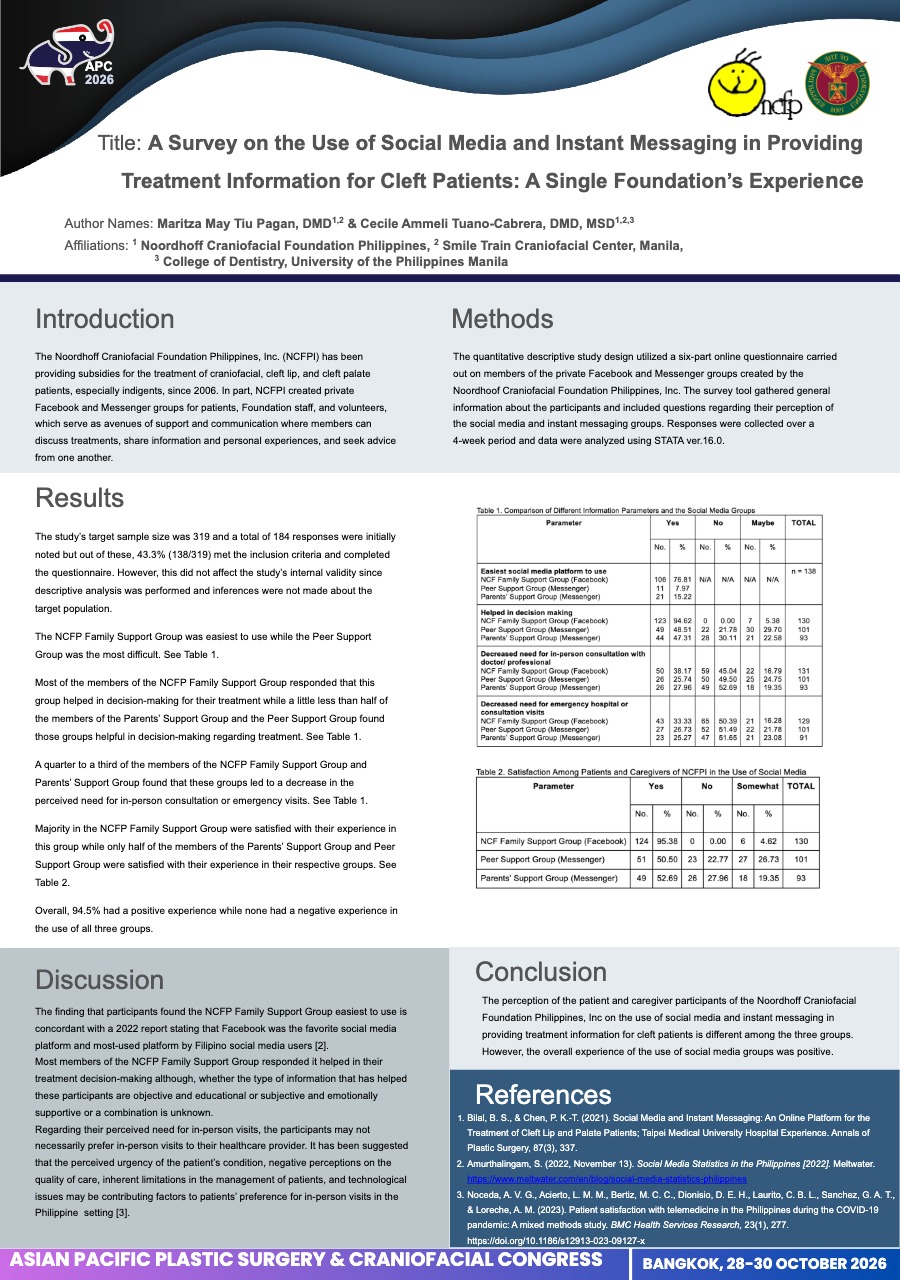
INTRODUCTION: Social media platforms are used for support and getting health information to manage or overcome disease. Since 2006, The Noordhoff Craniofacial Foundation Philippines, Inc. (NCFP) has provided subsidies for treatment of cleft lip and palate to indigent patients. In 2018, it began utilizing Facebook and Messenger to foster supportive environments for patient communication and education. The study objective was to determine the perception of using these platforms.
METHODS: A quantitative descriptive study design was employed. Cleft lip and palate patients or their caregivers answered a 6-part online questionnaire. The survey included questions on general information and their perception of the NCFP platforms. Responses were collected in 4 weeks, and data were analyzed using STATA ver.16.0.
RESULTS: The 138 participants were members of 1, 2, or all 3 groups. Of the participants, 90.6% (125) were part of the Facebook Group (Group I), 12.3% (17) were part of the Peer Messenger Group (Group II), and 21.7% (30) were part of the Parents’ Messenger Group (Group III). Group I was found to be the easiest to use by 76.8% of the respondents. In total, 94.6% of Group I, 48.5% of Group II, and 47.3% of Group III thought these groups helped them in treatment decision-making. The 45%, 25.7%, and 28% for Groups I, II, and III, respectively felt a decrease in their perceived need for in-person visits. Patient satisfaction was 95.4%, 50.5%, and 52.7% in Groups I, II, and III, respectively.
CONCLUSION: The perception on the use of social media platforms is different among the 3 groups. Group I ranked the highest in ease of use and help with decision-making but less than half the participants found that the 3 groups led to a decrease in the perceived need for in-person visits. Overall, their experience of using social media groups was positive.
View only · Double-click poster to enlarge · Download & print disabled
Loading poster…
RP-0004
- Title
- A Review of Orthodontic Considerations before and after Alveolar Bone Grafting in Patients with Cleft Lip and Palate
- Author(s)
- Cecile Ammeli Cabrera
- Affiliation
- College of Dentistry, University of the Philippines Manila; Noordhoff Craniofacial Foundation Philippines; Smile Train Craniofacial Center Manila; Our Lady of Peace Craniofacial Center, Paranaque
A Review of Orthodontic Considerations before and after Alveolar Bone Grafting in Patients with Cleft Lip and Palate RP-0004
Cecile Ammeli Cabrera · Research
A Review of Orthodontic Considerations before and after Alveolar Bone Grafting in Patients with Cleft Lip and Palate*
Cecile Tuano Cabrera, DMD, MSD
Noordhoff Craniofacial Foundation Philippines
College of Dentistry, University of the Philippines Manila
Smile Train Craniofacial Center, Manila
Our Lady of Peace Hospital, Paranaque
Introduction
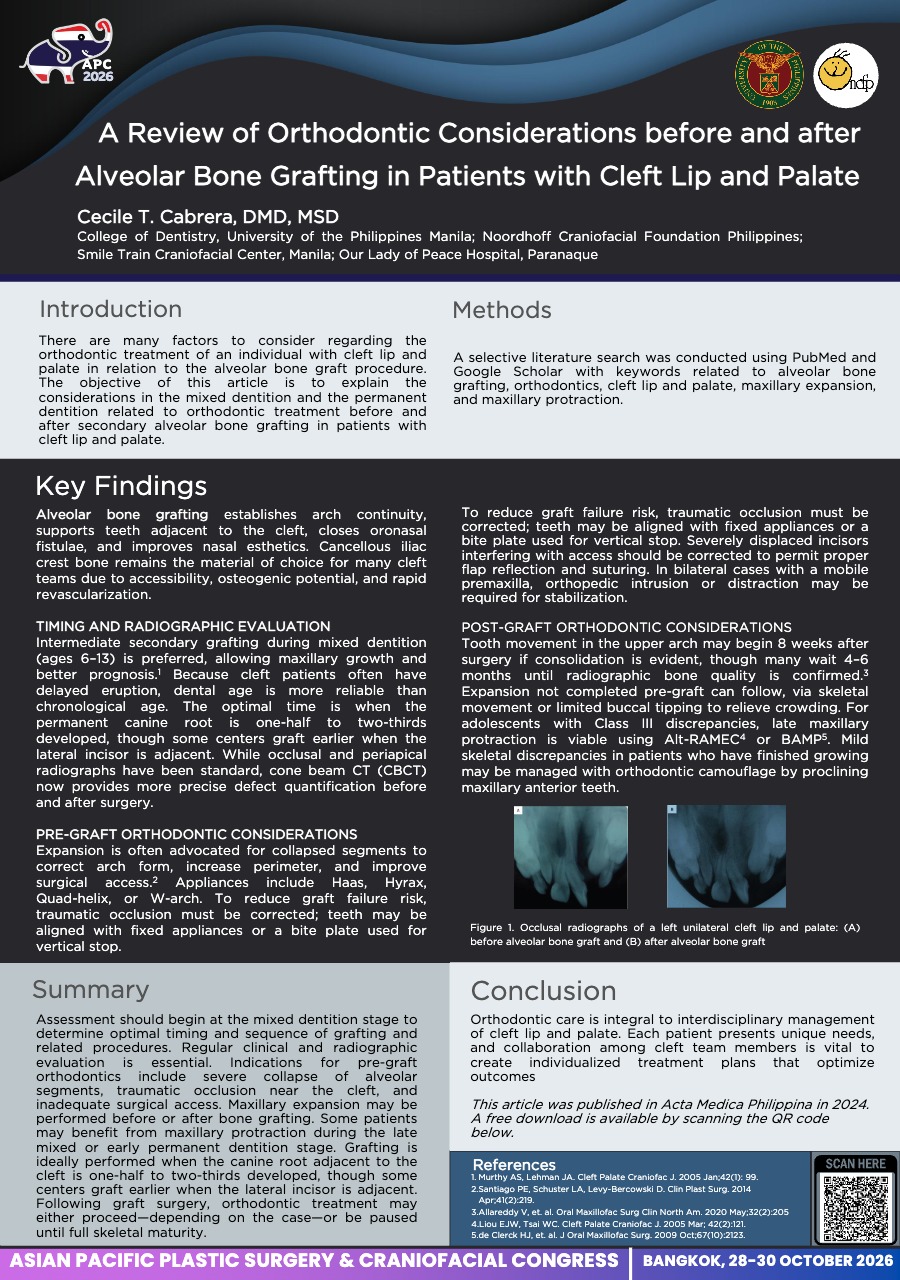
Successful orthodontic management in cleft lip and palate, in relation alveolar bone grafting depends on key factors: timing, treatment sequencing, pre-graft preparation and post-graft management. This review highlights current management concepts and protocols.
Methods
A selective literature search was conducted using PubMed and Google Scholar with keywords related to alveolar bone grafting, orthodontics, cleft lip and palate, maxillary expansion, and maxillary protraction.
Results and Key Findings
Assessment should begin at the mixed dentition stage to determine optimal timing and sequence of grafting and related procedures. Regular clinical and radiographic evaluation is essential. Indications for pre‑graft orthodontics include severe collapse of alveolar segments, traumatic occlusion near the cleft, and inadequate surgical access. Grafting is ideally performed when the canine root adjacent to the cleft is one‑half to two‑thirds developed, though some centers graft earlier when the lateral incisor is adjacent. After grafting, maxillary expansion may be performed in patients who have not received pre-graft orthodontics. Some patients may benefit from maxillary protraction during the late mixed or early permanent dentition stage. Following bone graft surgery, orthodontic treatment may either proceed—depending on the individual case—or be paused until the patient achieves full skeletal maturity.
Conclusion
Orthodontic care is integral to interdisciplinary management of cleft lip and palate. Each patient presents unique needs, and collaboration among cleft team members is vital to create individualized treatment plans that optimize outcomes.
*This article was published in: Acta Medica Philippina in 2024. Free full text link in Pubmed: https://pmc.ncbi.nlm.nih.gov/articles/PMC11694040/
View only · Double-click poster to enlarge · Download & print disabled
Loading poster…
RP-0019
- Title
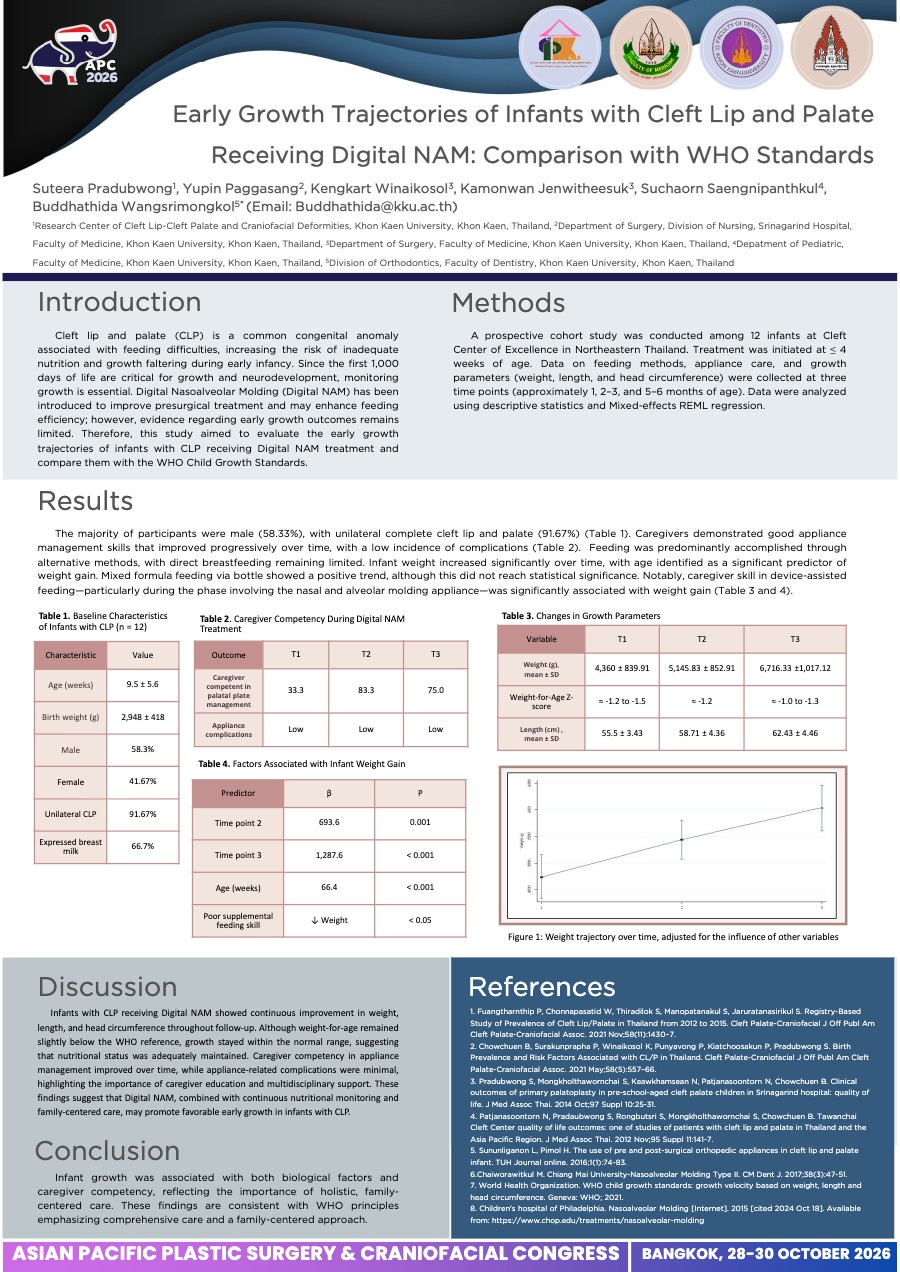
- Early Growth Trajectories in Infants with Cleft Lip and Palate Receiving Digital NAM: A Longitudinal Comparison with WHO Child Growth Standards
- Author(s)
- Suteera Pradubwong
- Affiliation
- Tawanchai Cleft Center, Khon Kaen University, Thailand
Early Growth Trajectories in Infants with Cleft Lip and Palate Receiving Digital NAM: A Longitudinal Comparison with WHO Child Growth Standards RP-0019
Suteera Pradubwong · Research
Introduction
Infants with cleft lip and palate are at risk of feeding difficulties and impaired early growth. Digital nasoalveolar molding (NAM) may support feeding and presurgical management, but evidence on early growth trajectories during NAM therapy remains limited. Monitoring growth alongside caregiver competency may help optimize early, family-centered care.
Objective
To evaluate early growth trajectories in infants with cleft lip and palate receiving digital nasoalveolar molding (NAM) and to compare growth patterns with WHO Child Growth Standards.
Methods
A prospective cohort study was conducted among 12 infants with cleft lip and palate enrolled at ≤4 weeks of age at the Cleft Center of Excellence, Northeastern Thailand. Infants received digital nasoalveolar molding (NAM) therapy with caregiver training and feeding support. Data were collected at approximately 1, 2–3, and 5–6 months of age. Weight, length, head circumference, feeding methods, and caregiver appliance-management skills were assessed. Growth trajectories were analyzed using descriptive statistics and mixed-effects restricted maximum likelihood (REML) regression.
Results
Most participants were male (58.33%) and had unilateral complete cleft lip and palate (91.67%). Caregivers demonstrated progressively improved appliance management skills over time, with few complications. Feeding was primarily achieved through alternative methods, while direct breastfeeding was limited. Weight increased significantly over time, with age significantly predicting weight gain. Mixed formula bottle feeding showed a positive trend but was not statistically significant. Caregiver competence in device-assisted feeding, particularly during the nasal and alveolar molding phase, was significantly associated with improved weight gain.
Conclusions
Early growth in infants with cleft lip and palate receiving digital NAM is influenced by both biological factors and caregiver competency. These findings support the importance of integrated, family-centered care consistent with WHO child growth and development principles.
View only · Double-click poster to enlarge · Download & print disabled
Loading poster…
RP-0007
- Title
- Community-Based Folate Promotion for Preventing Non-Syndromic Cleft Lip and Palate Among High-Risk Mothers in the Thai–Lao–Myanmar Border Region
- Author(s)
- Siriporn Sasakul
- Affiliation
- Northern Women's Development Foundation, Thailand
Community-Based Folate Promotion for Preventing Non-Syndromic Cleft Lip and Palate Among High-Risk Mothers in the Thai–Lao–Myanmar Border Region RP-0007
Siriporn Sasakul · Research
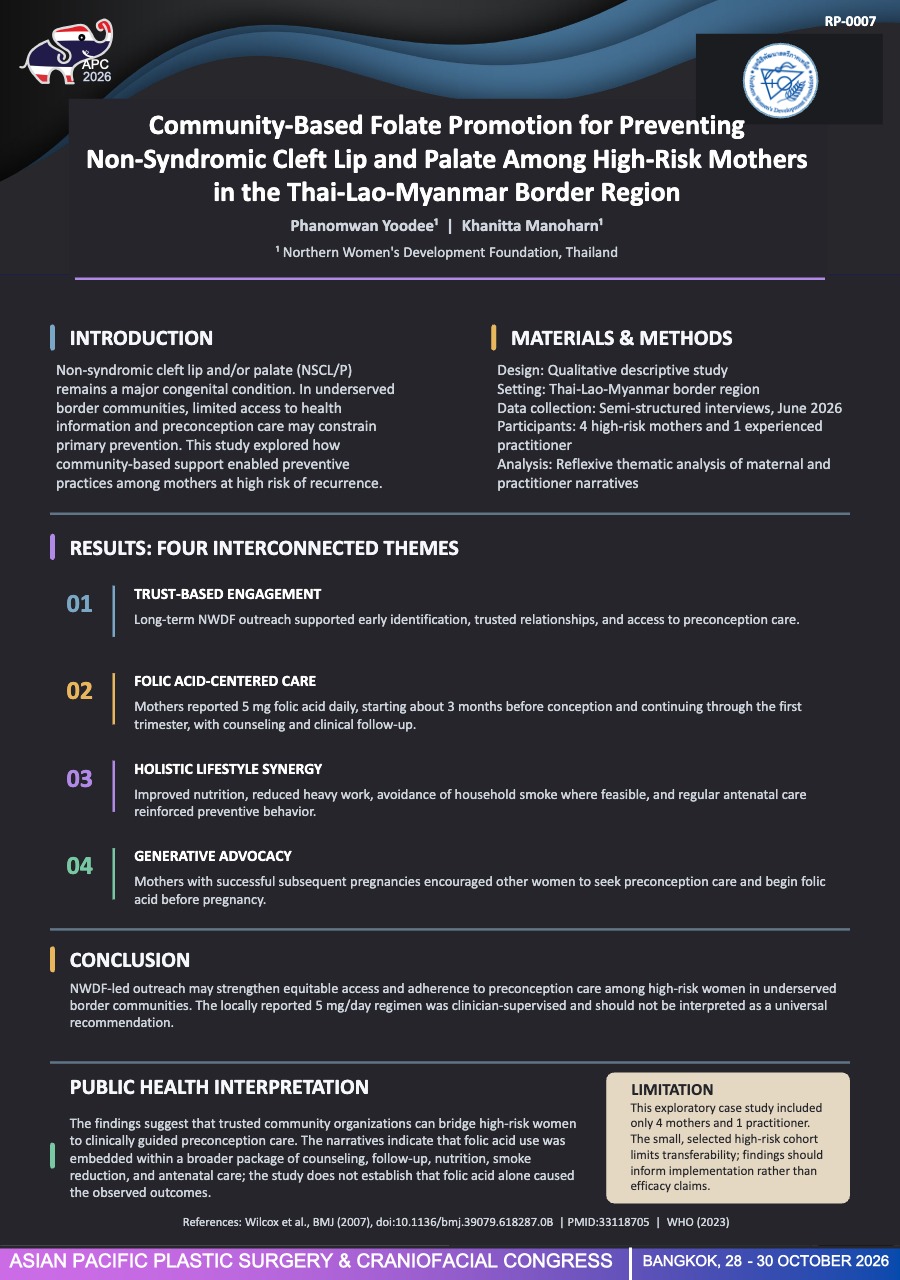
Introduction: Non-syndromic cleft lip and palate (NSCL/P) is a significant congenital anomaly despite evidence supporting periconceptional folic acid (FA) supplementation for primary prevention. Underserved border communities face challenges in accessing health information and preconception care. The Northern Women's Development Foundation (NWDF) collaborates with vulnerable families to bridge this gap. This study explored how community-based interventions support successful prevention among 4 high-risk mothers.
Materials & Methods: A qualitative descriptive study used semi-structured interviews with 1 experienced practitioner and 4 high-risk mothers from Myanmar (2), Thailand (1), and Laos (1). Reflexive thematic analysis examined how community health promotion facilitated FA uptake and preventive maternal behaviors.
Result(s): The reflexive analysis identified 4 themes reflecting a journey from risk-related fear to proactive empowerment: (1) Trust as a Catalyst for Engagement, where long-term community presence enabled identifying high-risk women; (2) Reclaiming Agency Through FA Protocols, mothers with personal CLP history (3 cases) or a previous cleft child (1 case) shifted from anxiety to empowerment through strict folic acid (FA) adherence and clinical consultations; (3) Holistic Lifestyle Synergy, where avoiding household smoke and heavy labor complemented medical care; and (4) Generative Advocacy, where the concrete success of 4 healthy infants born without CLP motivated mothers to become community peer advocates.
Conclusion: Successful NSCL/P prevention is achievable in resource-limited settings through integrated community-based and formal maternal healthcare. These concrete successes demonstrate that structural preconception support and folic acid adherence can effectively reduce the lifelong burden of cleft conditions.
View only · Double-click poster to enlarge · Download & print disabled
Loading poster…
RP-0005
- Title
- Families’ Lived Experiences, Quality of Life, and Health Equity in Childhood Nonsyndromic Clefts in Transboundary Haze Areas: A Hermeneutic Study with Border Health NGOs
- Author(s)
- Siriporn Sasakul
- Affiliation
- Dentistry Department, Nation University
Families’ Lived Experiences, Quality of Life, and Health Equity in Childhood Nonsyndromic Clefts in Transboundary Haze Areas: A Hermeneutic Study with Border Health NGOs RP-0005
Siriporn Sasakul · Research
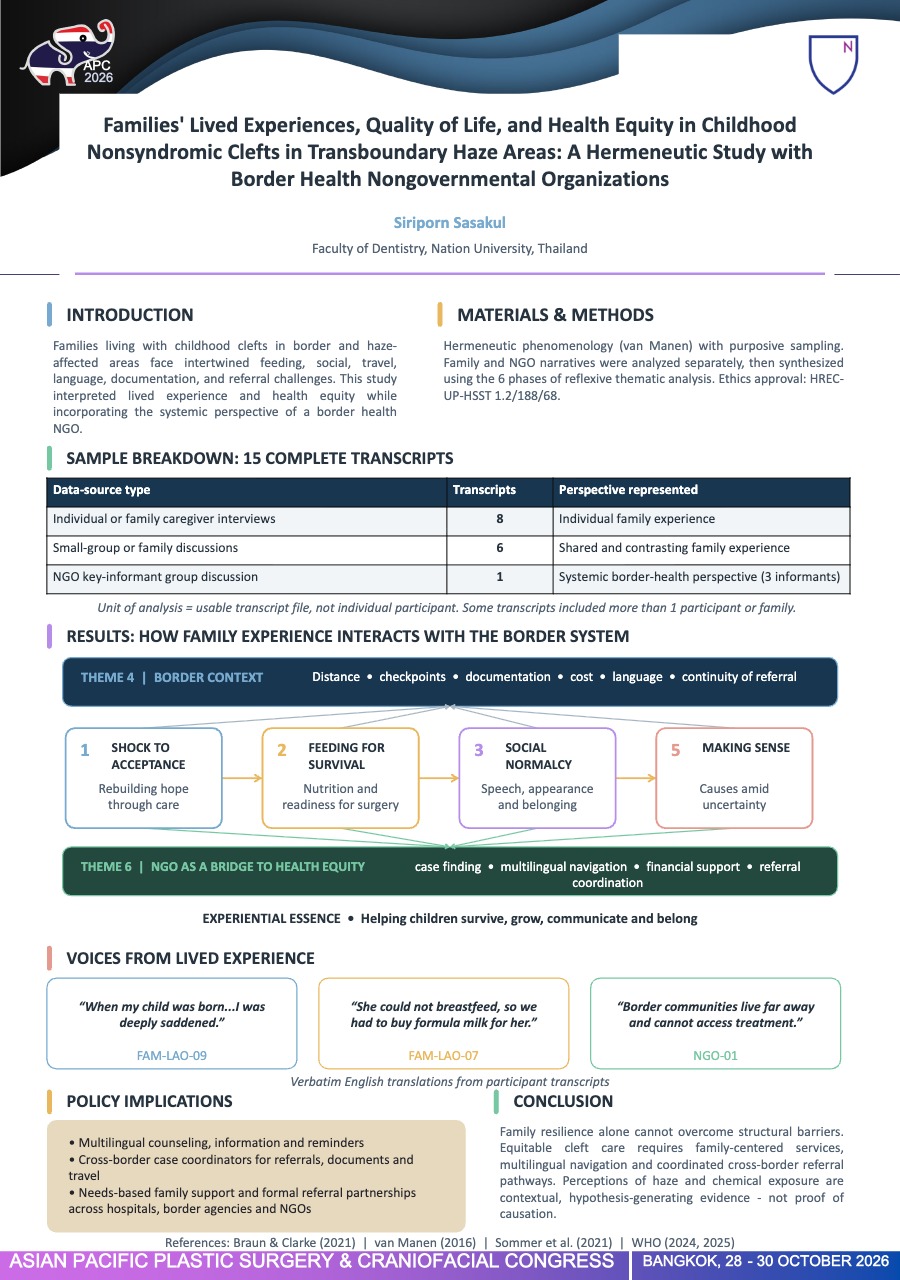
Introduction: This qualitative study aimed to understand and interpret the lived experiences, quality of life, and health equity of families of children with nonsyndromic cleft lip and/or palate in border areas affected by transboundary haze. Perspectives from border health nongovernmental organizations (NGOs) were incorporated to illuminate the broader systemic context.
Methods: Hermeneutic phenomenology, informed by van Manen, provided the principal philosophical framework for interpreting lived experience. Data were analyzed using the six phases of reflexive thematic analysis to enhance methodological rigor and transparency in theme development. Participants were purposively selected from family members, primary caregivers, and key informants from border health NGOs, yielding 15 data sources. Data were collected through individual semi-structured interviews, family interviews, and small-group discussions. Family narratives and systemic perspectives were analyzed separately before interpretive synthesis.
Results: Six themes were identified: (1) from emotional shock to acceptance; (2) feeding as a mission for survival; (3) between the social gaze and everyday normalcy; (4) borders turning treatment into a long-term journey; (5) constructing meanings of causation amid uncertainty; and (6) NGOs as bridges to health equity. The essence of the experience was families’ sustained effort to help their children survive, grow, communicate, and attain social belonging. These outcomes depended not only on individual resilience but also on nutrition, income, language, documentation, distance, information, referral systems, and support networks.
Conclusion: The findings support family-centered cleft care, case coordination, multilingual communication, and cross-border collaboration grounded in health equity. Participants’ perceptions of haze and chemical exposure should be regarded as hypothesis-generating contextual evidence rather than epidemiological confirmation of causation.
View only · Double-click poster to enlarge · Download & print disabled
Loading poster…
RP-0006
- Title
- Clinical guidelines for cleft lip and palate care: a systematic review
- Author(s)
- Omar Barasain
- Affiliation
- University of Alberta
Clinical guidelines for cleft lip and palate care: a systematic review RP-0006
Omar Barasain · Research
Abstract
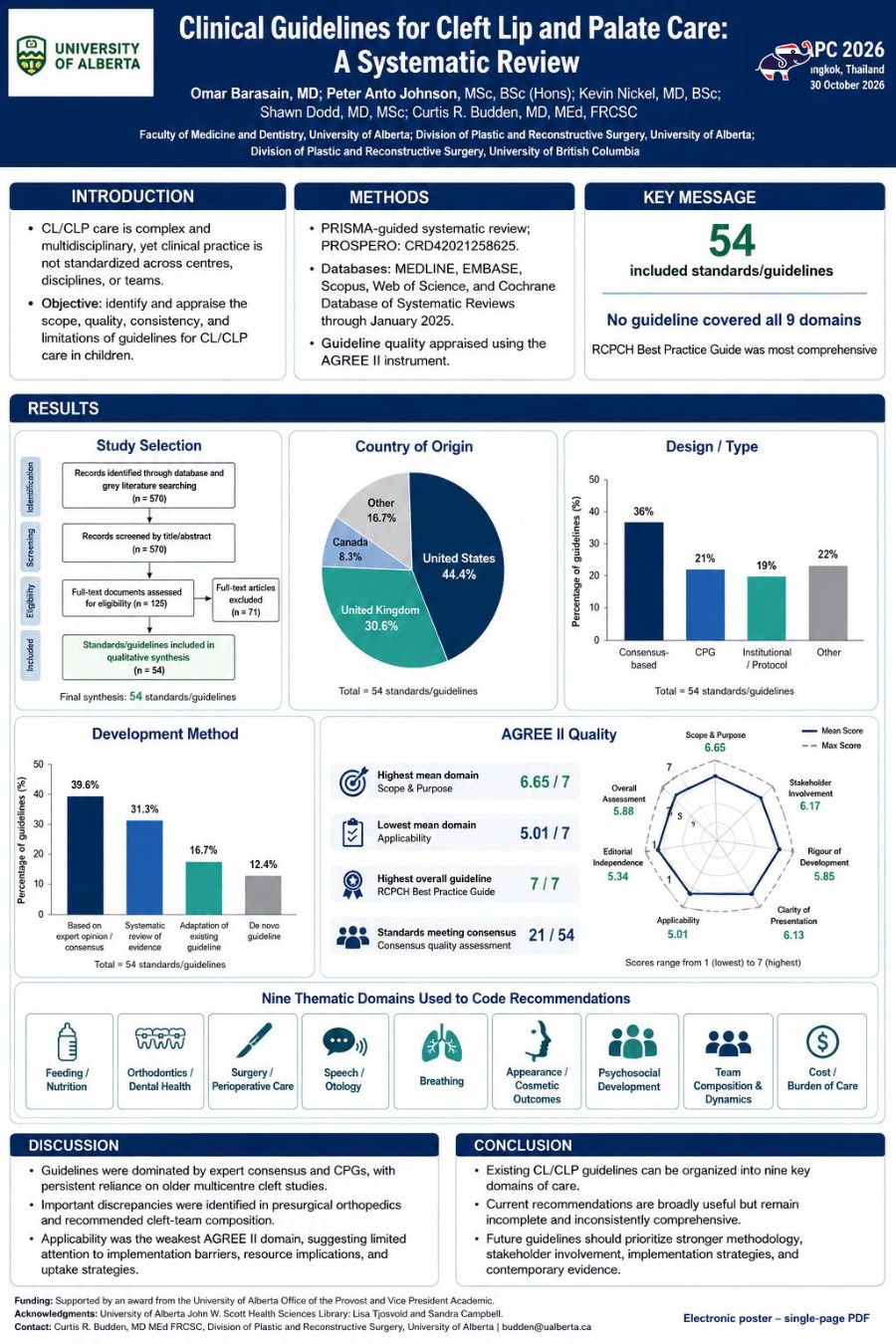
Objectives: The care of patients with cleft lip and/or cleft palate is not standardized across centres. High quality and evidence-based standards to guide clinical decision-making are critical. The objective of this review is to appraise the scope, quality, adequacy, consistency, and limitations of guidelines relating to the management of CL/CLP in children across all disciplines of care.
Design: (PRISMA) guidelines, MEDLINE, EMBASE, SCOPUS, Web of Science, and Cochrane Database of Systematic Reviews databases were systematically searched for guidelines relating to the care and management of children with CL/CLP. Guidelines were assessed utilizing the Appraisal of Guidelines for Research & Evaluation II (AGREE II) instrument.
Results: Fifty-Four standards were selected for inclusion. Most studies were performed in the United States (44.4%) and United Kingdom (38.9%). Standards consisted of primarily expert consensus recommendations (38%). Recommendations were principally developed by a task force or after expert consensus (39.6%). Recommendations were coded according to nine thematic domains: "Feeding ", "Orthodontics", "Surgery", "Speech", "Breathing”, “Appearance", "Psychosocial Outcome", "Team Composition and Dynamics", and "Cost of Care ". No guideline encompassed all domains. Discrepancies were observed across domains, guideline setting, and data collection method.
Conclusions: Existing guidelines can effectively be organized into nine categories. Based on appraised quality of evidence for recommendations, they are supported by moderate quality of evidence and should be utilized to guide clinical decision-making to improve outcomes for CL/CLP patients. Nonetheless, there is an ongoing need for high-quality practice guidelines for comprehensive CL/CLP care.
View only · Double-click poster to enlarge · Download & print disabled
Loading poster…
RP-0010
- Title
- An analysis of mandibular characteristics according to biological sex using 3D CT scans in Koreans
- Author(s)
- Soyeon Jung
- Affiliation
- Hallym University Dongtan Sacred Heart Hospital
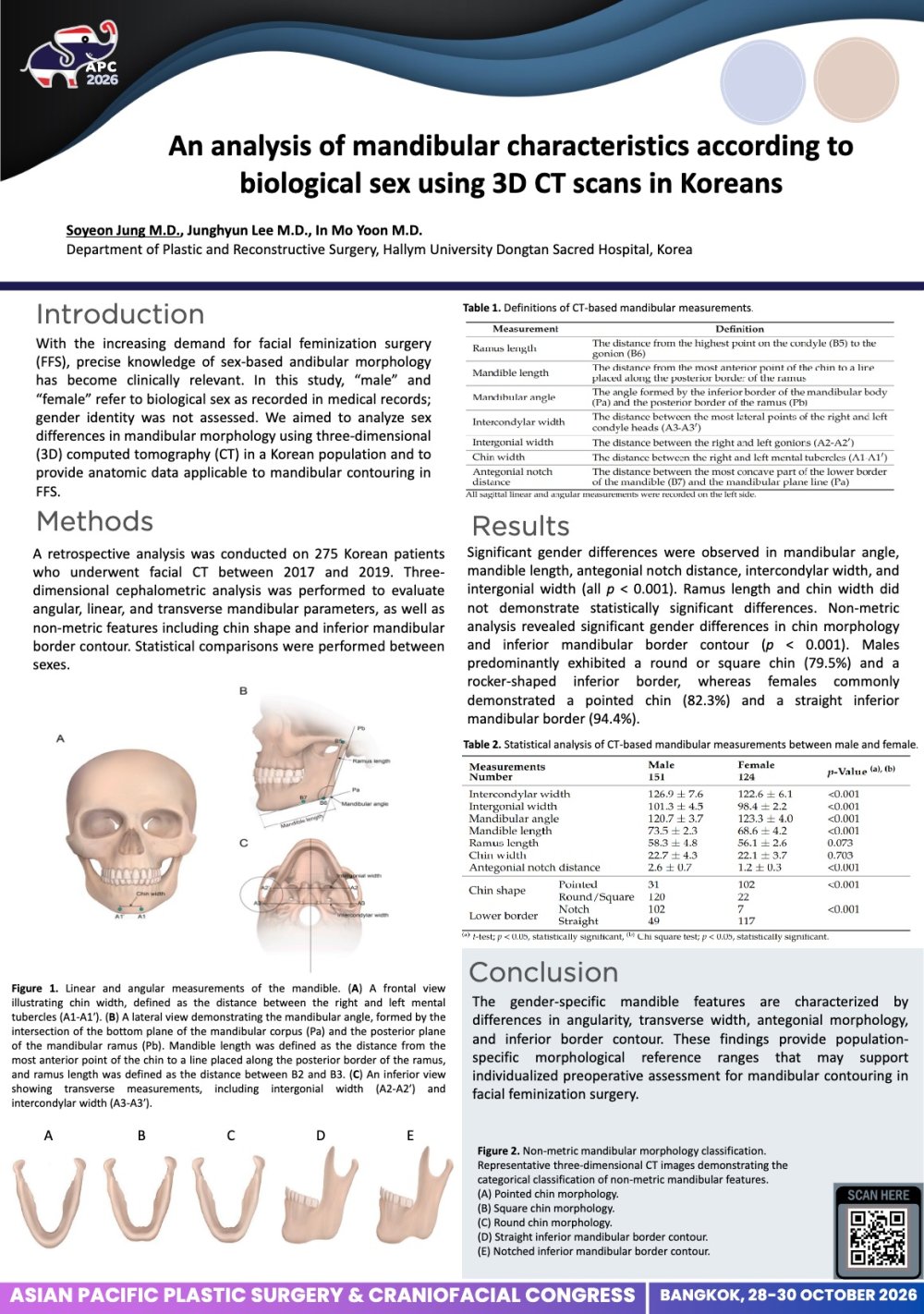
An analysis of mandibular characteristics according to biological sex using 3D CT scans in Koreans RP-0010
Soyeon Jung · Research
Introduction: With the increasing demand for facial feminization surgery (FFS), precise knowledge of sex-based andibular morphology has become clinically relevant. In this study, “male” and “female” refer to biological sex as recorded in medical records; gender identity was not assessed. We aimed to analyze sex differences in mandibular morphology using three-dimensional (3D) computed tomography (CT) in a Korean population and to provide anatomic data applicable to mandibular contouring in FFS.
Methods: A retrospective analysis was conducted on 275 Korean patients who underwent facial CT between 2017 and 2019. Three- dimensional cephalometric analysis was performed to evaluate angular, linear, and transverse mandibular parameters, as well as non-metric features including chin shape and inferior mandibular border contour. Statistical comparisons were performed between sexes.
Results: Significant gender differences were observed in mandibular angle, mandible length, antegonial notch distance, intercondylar width, and intergonial width (all p < 0.001). Ramus length and chin width did not demonstrate statistically significant differences. Non-metric analysis revealed significant gender differences in chin morphology and inferior mandibular border contour (p < 0.001). Males predominantly exhibited a round or square chin (79.5%) and a rocker-shaped inferior border, whereas females commonly demonstrated a pointed chin (82.3%) and a straight inferior mandibular border (94.4%).
Conclusions: The gender-specific mandible features are characterized by differences in angularity, transverse width, antegonial morphology, and inferior border contour. These findings provide population-specific morphological reference ranges that may support individualized preoperative assessment for mandibular contouring in facial feminization surgery.
View only · Double-click poster to enlarge · Download & print disabled
Loading poster…
Page 2 of 2 (24 poster(s))
Double-click or press Esc to close · Scroll to zoom